
Private jets make it possible to travel between cities and countries without the long waits and connections that come with commercial flights. Some private jets are designed for short trips between nearby cities, while others can fly across oceans without stopping to refuel.
So, how far can a private jet fly? The answer depends on the aircraft model, fuel capacity, passenger load, weather conditions, and flight route. Smaller private jets may cover around 1,000 to 2,000 miles, while some long-range business jets can travel more than 7,000 miles on a single flight.
Understanding the range of a private jet can help travelers choose the right aircraft for their journey. Here is a closer look at how far different private jets can fly and what affects their maximum distance.
Key Takeaways
- Private jet range varies from around 1,000 miles to more than 8,000 miles, depending on the aircraft model.
- Light jets are suitable for shorter trips, while heavy and ultra-long-range jets can cover long international distances.
- Passenger weight, luggage, weather, wind, and fuel reserves affect the actual flight range.
- Many long-range private jets can cross the Atlantic or Pacific on suitable routes without refueling.
- Choosing the right private jet depends on the travel distance, passenger count, luggage, and whether a nonstop flight is possible.
What Is the Average Range of a Private Jet?
The average range of a private jet varies considerably because the category includes several types of aircraft. A light jet built for short business trips has different capabilities from a large cabin jet designed for international travel.
Most private jets fall into a few main categories based on their size, passenger capacity, and performance.
- Very light jets: Around 1,000 to 1,200 miles
- Light jets: Around 1,200 to 2,000 miles
- Midsize jets: Around 2,000 to 3,000 miles
- Super midsize jets: Around 3,000 to 4,000 miles
- Heavy jets: Around 4,000 to 6,000 miles
- Ultra-long-range jets: Around 6,000 to 8,000 miles or more
These figures are general estimates rather than fixed limits. The actual range depends on the specific aircraft and operating conditions.
For example, a light jet may be suitable for a trip between two nearby states, while an ultra-long-range jet can connect destinations on different continents. Choosing an aircraft with enough range for the entire journey can reduce the need for fuel stops and make travel more convenient.
How Far Can Different Types of Private Jets Fly?
Not every private jet is built for the same type of journey. Some prioritize lower operating costs and access to smaller airports, while others focus on long-distance travel, cabin comfort, and the ability to cross oceans.
1. Very Light Jets
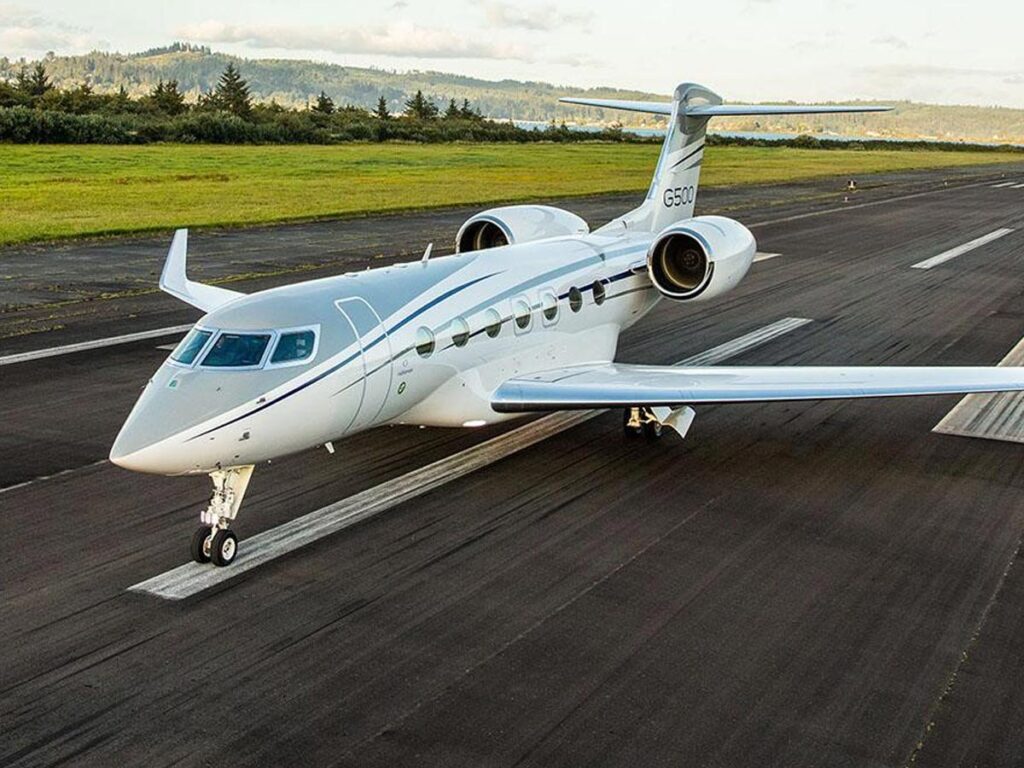
Very light jets are among the smallest private aircraft available for charter. They are designed for short trips and can often accommodate around four to six passengers, depending on the model and cabin configuration.
Their typical range is approximately 1,000 to 1,200 miles. This makes them useful for regional travel, short business trips, and weekend getaways.
For example, a very light jet may be suitable for a journey between nearby cities that takes a few hours by air. However, it may not be the right choice for a long international flight because of its limited range and smaller cabin.
These aircraft can offer a practical option when a traveler wants the convenience of private aviation without paying for the size and capabilities of a larger jet.
2. Light Jets
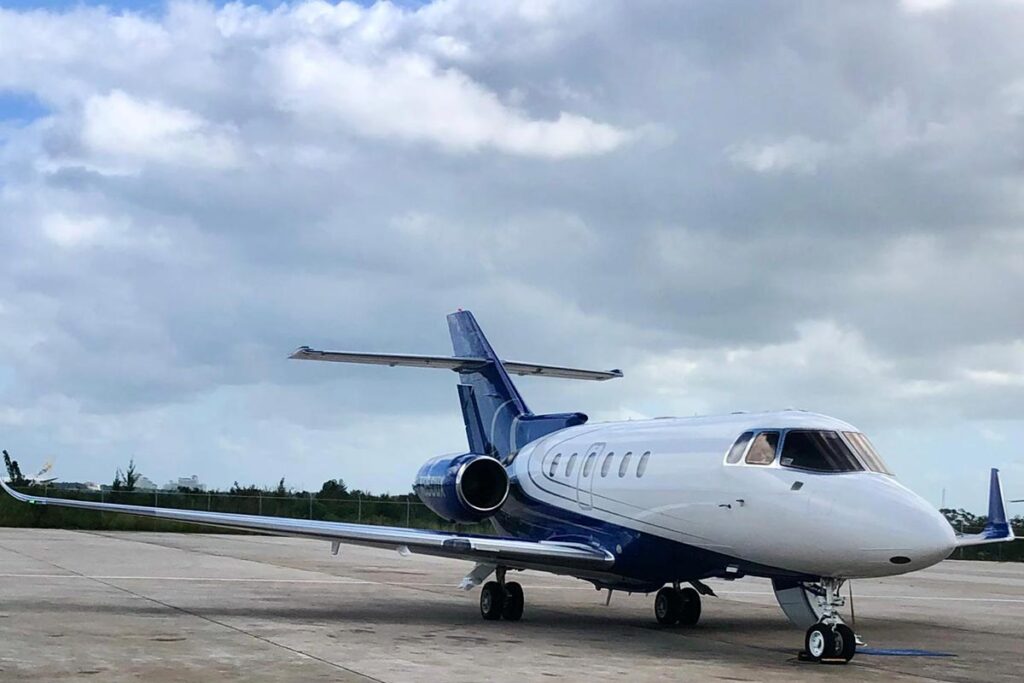
Light jets provide more cabin space and performance than very light jets. They are commonly used for business travel, family trips, and short to medium-distance journeys.
Many light jets have a range of approximately 1,200 to 2,000 miles, although the exact distance varies by model.
A light jet may be suitable for a nonstop flight between cities in different regions of the same country. It can also work well for trips that do not require a large cabin or extensive luggage capacity.
However, travelers should not assume that a jet with a published range of 2,000 miles can fly that distance under every condition. Passenger weight, baggage, weather, and the need to carry reserve fuel can affect the usable range.
3. Midsize Jets
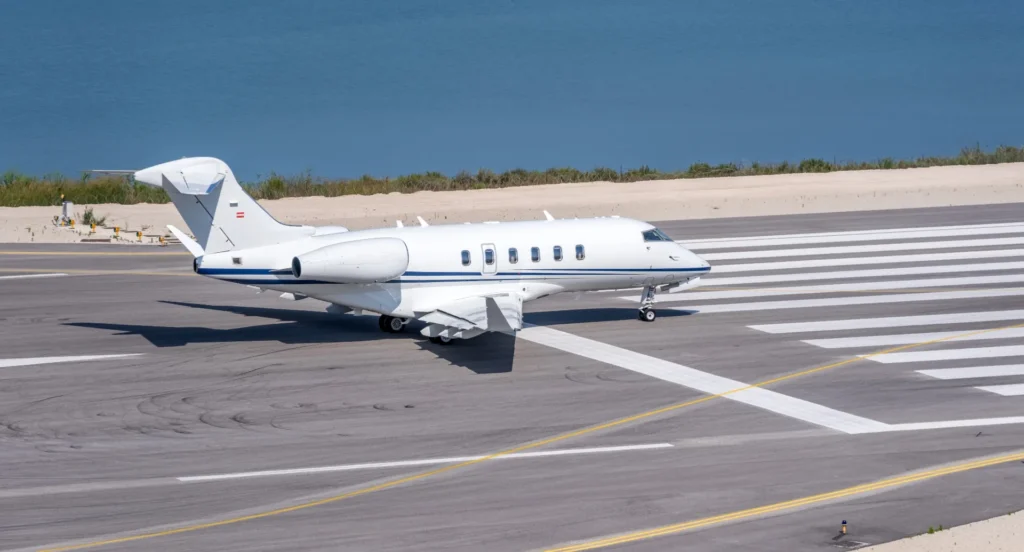
Midsize jets are designed for travelers who need a balance of range, cabin space, and performance. They often accommodate six to nine passengers, depending on the aircraft and seating arrangement.
Their range generally falls between 2,000 and 3,000 miles.
This category can be suitable for longer domestic trips and some international journeys. Midsize jets also tend to offer more room to move around than smaller aircraft, making them more comfortable for extended flights.
For companies sending employees to meetings in different cities, these jets can provide a useful combination of travel time, privacy, and cabin comfort.
Whether a midsize jet can complete a particular trip nonstop depends on the distance between the airports and the aircraft’s actual operating range.
4. Super Midsize Jets
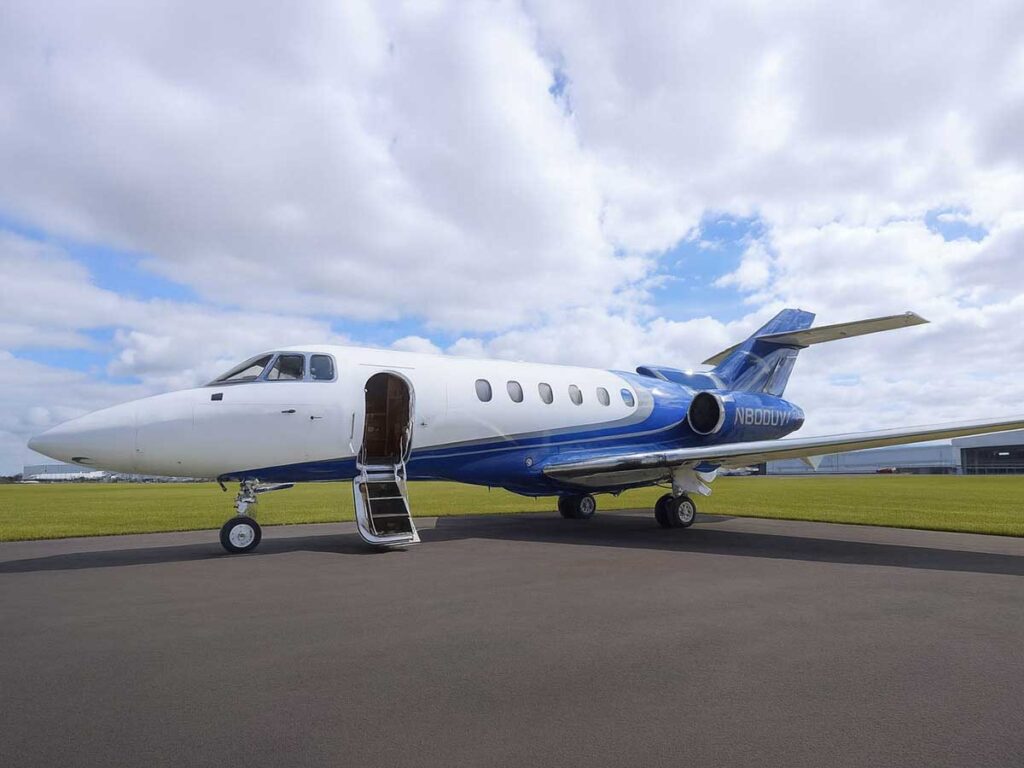
Super midsize jets offer a longer range than standard midsize aircraft, along with larger cabins and higher cruising speeds in many models.
Many can fly approximately 3,000 to 4,000 miles without refueling under suitable conditions.
This range makes them useful for longer domestic flights and international routes that might be difficult for smaller jets to complete nonstop.
Some super midsize aircraft can also operate on routes that cross parts of the Atlantic, depending on the departure and arrival airports, weather, payload, and flight plan.
For travelers who need to cover substantial distances without moving up to a large heavy jet, this category can provide a practical middle ground.
5. Heavy Jets
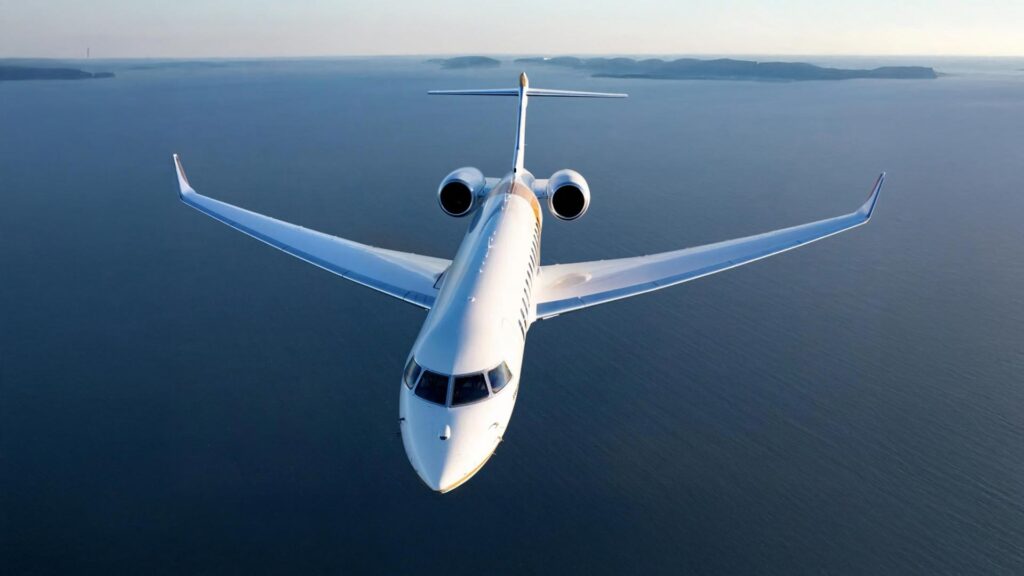
Heavy jets are built for longer journeys and can accommodate larger groups of passengers. Many have spacious cabins with separate seating areas, larger baggage compartments, and facilities designed to support extended flights.
Their typical range is approximately 4,000 to 6,000 miles, although some models can fly farther.
Heavy jets are commonly used for international business trips, long-distance family travel, and journeys involving several passengers.
Depending on the model and route, a heavy jet may be able to fly nonstop between major cities in different countries. Some routes across the Atlantic are within the capabilities of these aircraft, although the exact distance and operating conditions matter.
For longer journeys, the larger cabin can also make it easier for passengers to rest, work, or spend time together during the flight.
6. Ultra-Long-Range Private Jets
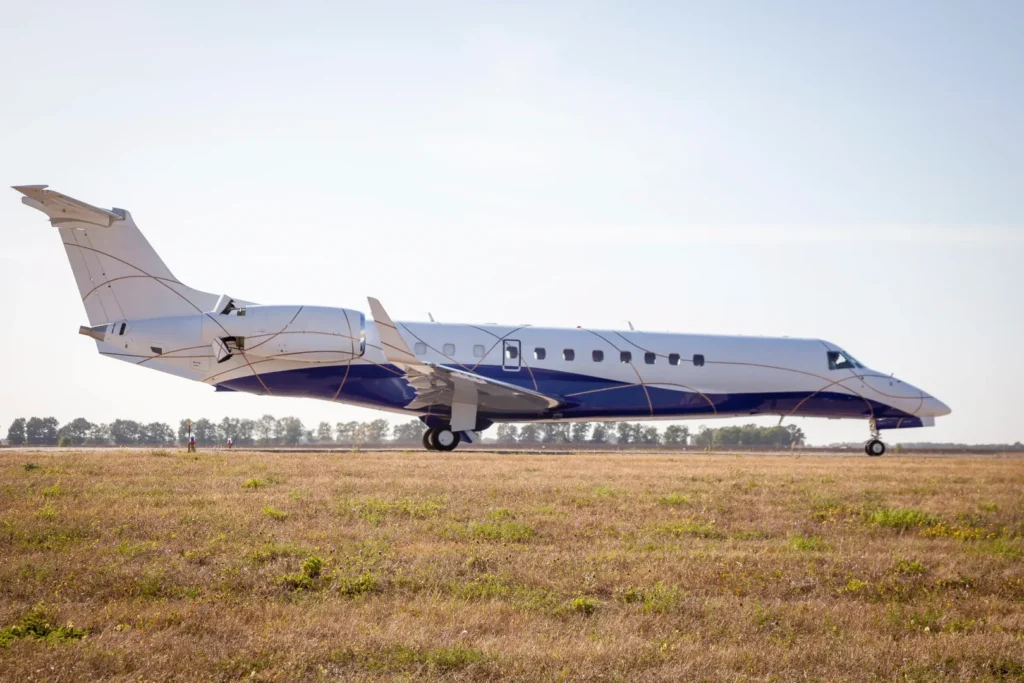
Ultra-long-range jets sit at the upper end of private aviation. They are designed to cover very long distances while providing the cabin space and facilities needed for extended international travel.
Some models have published ranges of approximately 6,000 to 8,000 miles or more.
Aircraft in this category can connect destinations across oceans and, on suitable routes, travel between cities on different continents without refueling.
For example, certain ultra-long-range jets can operate nonstop between parts of North America, Europe, Asia, and the Middle East, depending on the route and aircraft specifications.
Their ability to cover such distances makes them useful for executives, international travelers, and families who want to reduce connections and fuel stops.
However, even the longest-range private jets have limits. Flight planning must account for weather, passenger load, fuel reserves, airport conditions, and other operational requirements.
What Is the Longest Distance a Private Jet Can Fly?
Some of the longest-range private jets have published maximum ranges approaching or exceeding 8,000 miles under specified conditions.
For example, the Gulfstream G800 has a published maximum range of approximately 8,200 nautical miles at Mach 0.85. That is about 9,430 statute miles. The Bombardier Global 8000 has a published range of approximately 8,000 nautical miles at Mach 0.85, or about 9,200 statute miles.
These figures are based on manufacturer specifications and should not be treated as guaranteed distances for every flight.
It is important to understand the difference between nautical miles and statute miles. Aviation manufacturers commonly publish aircraft range in nautical miles, while everyday travel distances are often expressed in statute miles or kilometers.
A nautical mile is approximately 1.15 statute miles. This difference can make the published range appear shorter or longer depending on the unit used.
The actual distance an aircraft can cover on a particular trip may also be lower than its published maximum range because of passenger weight, winds, routing, and required fuel reserves.
What Affects How Far a Private Jet Can Fly?
An aircraft’s published range is only one part of the picture. Several factors determine how far a private jet can travel on a specific journey.
Passenger and Baggage Weight
The weight carried by an aircraft affects how much fuel it can take while remaining within its operating limits.
A jet carrying more passengers and heavier luggage may have less range than the same aircraft carrying a lighter load.
This is particularly important for smaller jets, where passenger and baggage limits can have a noticeable effect on long-distance performance.
Fuel Capacity
Fuel capacity is one of the main factors that determines an aircraft’s range. Jets designed for long-distance travel have fuel systems and capacities suited to extended flights.
However, carrying more fuel also adds weight. Aircraft manufacturers and flight planners account for this when calculating how much fuel is needed and how much payload can be carried.
Weather and Wind Conditions
Wind can have a significant effect on flight distance and fuel consumption.
A strong tailwind can help an aircraft cover more ground over the same period, while a headwind can increase travel time and fuel use.
Storms and other weather conditions may also require pilots to change the planned route. These adjustments can increase the distance flown and reduce the available range.
Cruising Speed and Altitude
Private jets operate at different cruising speeds and altitudes depending on their design and flight conditions.
Flying faster can increase fuel consumption, which may reduce the maximum distance an aircraft can cover. Some jets have published range figures for specific cruising speeds, so comparing those figures without considering the stated conditions can be misleading.
Pilots and flight planners select operating conditions based on the route, weather, fuel requirements, and aircraft performance.
Flight Route
The distance between two airports is not always the same as the distance an aircraft must fly.
Air traffic restrictions, restricted airspace, weather systems, and airport availability can affect the planned route.
For international journeys, these factors may influence whether a private jet can fly nonstop or needs to stop for fuel.
Required Fuel Reserves
Private jets cannot plan a flight using only the fuel needed to reach the destination. Regulations and operational procedures require additional fuel for contingencies and other needs.
Depending on the flight, this can include fuel for an alternate airport, holding, and unexpected changes.
As a result, the usable range for a specific flight may be lower than the maximum range stated in the aircraft specifications.
Can a Private Jet Fly Across the Atlantic or Pacific Ocean?
Yes. Many private jets can cross the Atlantic Ocean, and some can fly across the Pacific on suitable routes.
The aircraft’s range is the main consideration, but it is not the only one. The departure airport, destination, wind conditions, fuel reserves, passenger load, and available alternates all play a role.
Heavy jets and ultra-long-range jets are commonly considered for long international flights because they offer the range needed for many transoceanic routes.
Crossing the Pacific can be more demanding because some routes involve greater distances between suitable airports. A flight that is possible for one ultra-long-range model may require a fuel stop for another aircraft.
For this reason, travelers should ask an aviation operator to confirm whether a particular route can be completed nonstop with the intended number of passengers and their luggage.
How Long Can a Private Jet Stay in the Air?
The amount of time a private jet can remain airborne depends on its fuel capacity, fuel consumption, cruising speed, and operating conditions.
Smaller jets may spend around two to four hours on many typical trips, while larger long-range aircraft can remain in the air for well over ten hours. Some ultra-long-range flights can last approximately 15 to 17 hours or longer, depending on the aircraft and route.
Flight duration is not the same as maximum range. Two jets may cover similar distances at different speeds, and headwinds can increase the time required to reach a destination.
Long flights also involve crew duty limits, passenger comfort, and operational planning. These considerations can affect how a journey is scheduled even when the aircraft has enough fuel range to complete it.
How to Choose a Private Jet Based on Flight Distance
Choosing a private jet starts with understanding the distance between the departure and arrival airports. From there, travelers can consider passenger numbers, luggage, flight duration, and whether a fuel stop is acceptable.
For short regional trips, a very light or light jet may provide sufficient range. Midsize and super midsize jets can suit longer journeys, while heavy and ultra-long-range jets are designed for many extended international routes.
It is also important to consider the actual itinerary rather than selecting an aircraft based on its maximum advertised range alone.
For example, a flight with eight passengers and substantial luggage may have different aircraft requirements from the same route with four passengers and lighter baggage.
A charter operator can assess the planned route, expected weather, aircraft performance, fuel reserves, and airport restrictions before confirming a suitable aircraft.
Frequently Asked Questions
Does a private jet need a runway to refuel?
Yes, a private jet needs access to an airport or suitable airfield with fuel services to refuel on the ground.
How Far Can a Private Jet Fly on a Single Flight?
A private jet can fly between 1,000 and 8,000 miles or more on a single flight, depending on its model, fuel capacity, passenger load, and weather conditions.
Does flying at night affect a private jet’s range?
No, night flying does not directly reduce a private jet’s range. However, weather, routing, and operational requirements can affect the distance flown.
Can a private jet fly in bad weather?
Private jets can operate in many weather conditions, but severe weather may require route changes, delays, or cancellations.
How much fuel does a private jet use per hour?
Fuel consumption depends on the aircraft model, size, and flight conditions. Many business jets consume hundreds to more than a thousand pounds of fuel per hour.
Can a private jet fly to any airport?
No, a private jet must use an airport that meets its runway length, aircraft weight, safety, and operational requirements.
Does cabin pressure change during a long private jet flight?
Yes, cabin pressure is regulated during flight to maintain a comfortable and safe environment at high cruising altitudes.
Can a private jet carry enough luggage for a long trip?
Yes, many private jets can carry luggage for long trips, but the available space depends on the aircraft model, passenger count, and weight limits.
Do private jets fly directly to their destinations?
Private jets can often fly directly to the selected airport, but weather, air traffic restrictions, and fuel requirements may affect the route.
Can a private jet fly farther with fewer passengers?
Yes, fewer passengers and lighter luggage can reduce the aircraft’s weight, potentially allowing it to carry more fuel within its operating limits and increase its usable range.
Conclusion
A private jet can fly anywhere from around 1,000 miles to more than 8,000 miles, depending on its type and capabilities. Smaller jets are designed for regional travel, while heavy and ultra-long-range aircraft can cover substantial distances and cross oceans without refueling.
The right aircraft depends on the journey, not just the maximum range listed in its specifications. Passenger numbers, baggage, weather, fuel reserves, and airport requirements all affect whether a flight can be completed nonstop.
By understanding these factors, travelers can choose an aircraft that matches their route, comfort needs, and travel plans.