
A private jet is an aircraft used for private travel instead of regular commercial airline service. Private jets are commonly used by business executives, celebrities, athletes, families, and other travelers who want more flexibility and privacy when flying.
Unlike commercial flights, where passengers purchase individual seats and follow an airline’s fixed schedule, private jet passengers usually charter or own the entire aircraft. This gives them more control over departure times, airports, and travel arrangements.
Private jets come in different sizes, from small aircraft for a few passengers to large jets with bedrooms, dining areas, and long-range capabilities.
Key Takeaways
- A private jet is an aircraft used for private travel instead of commercial airline service.
- Private jets offer more flexibility with flight times, airports, and travel arrangements.
- Different types of private jets are available for short trips, long-distance travel, and larger groups.
- Travelers can access private aviation through chartering, jet cards, fractional ownership, or buying an aircraft.
- Private jet costs depend on factors such as aircraft type, distance, passengers, fuel, and airport fees.
- Private aviation offers privacy and convenience but can have a higher cost and environmental impact than commercial travel.
How Does a Private Jet Work?
A private jet works much like any other airplane. It has engines, a cockpit, navigation equipment, communication systems, and other equipment needed for safe flight.
The main difference is how the aircraft is used.
When booking a private jet, passengers provide their departure location, destination, travel date, preferred time, and number of passengers. The operator then selects an aircraft that suits the trip.
Before the flight, the aircraft is prepared, the crew completes the required checks, and passengers board at a private aviation facility or airport terminal.
Private flights often use a Fixed-Base Operator, commonly called an FBO. These facilities are designed for private aircraft and usually have smaller passenger areas than large commercial airport terminals.
What Is an FBO?
FBO stands for Fixed-Base Operator. It is a facility at an airport that provides services for private aircraft and passengers.
An FBO may offer:
- Passenger lounges
- Wi-Fi
- Refreshments
- Private meeting areas
- Baggage assistance
- Ground transportation
- Aircraft fueling
- Pilot facilities
Using an FBO can make the airport experience quicker and more private compared with a busy commercial terminal.
Passengers may be able to arrive closer to their departure time because they do not usually need to go through the same process as passengers on a commercial flight. However, security and other required procedures still apply.
Types of Private Jets
Private jets come in several sizes. The right aircraft depends on the number of passengers, travel distance, luggage, and budget.
Very Light Jets
Very light jets are among the smallest private jets. They are designed mainly for short trips and smaller groups.
They can be useful for regional travel and are generally less expensive to operate than larger private aircraft.
Light Jets
Light jets offer more space than very light jets and are commonly used for short and medium-distance flights.
They may include comfortable seating, a small cabin, baggage storage, and a lavatory.
Midsize Jets
Midsize jets offer more cabin space and range than light jets. They are suitable for longer trips and can provide a more comfortable environment for several passengers.
Some include larger seats, work areas, entertainment systems, and private lavatories.
Super Midsize Jets
Super midsize jets provide even more cabin space and longer range. They are often used for longer domestic flights and some international routes.
These aircraft can include spacious seating areas, dining tables, entertainment systems, and additional luggage space.
Heavy Jets
Heavy jets are among the largest private aircraft. They offer large cabins, greater luggage capacity, and longer flight ranges.
Depending on the aircraft, the cabin may have separate areas for working, dining, relaxing, and sleeping.
Ultra Long Range Jets
Ultra long range jets are designed for very long international flights. They can travel thousands of miles and may be able to connect distant cities without a fuel stop.
These aircraft often have large cabins with multiple sections and luxury amenities.
Private Jet vs Commercial Airplane
Private jets and commercial airplanes both provide air transportation, but the travel experience is different.
Scheduling
Commercial airlines operate according to fixed schedules. Passengers select a flight that matches their plans.
Private jet passengers can usually request their preferred departure time. Availability, airport operating hours, crew requirements, weather, and other factors can affect the final schedule.
Airports
Commercial airlines mainly operate from large airports.
Private jets can often use smaller airports and regional airfields. This can make it possible to land closer to the final destination.
Privacy
Commercial flights include many passengers. Private jets allow travelers to fly with their own group.
This can provide a quieter and more private environment, which can be useful for business discussions or personal travel.
Convenience
Private aviation can reduce the time spent at busy airports. Passengers usually use private aviation terminals instead of large commercial terminals.
However, private flights still require compliance with aviation, security, customs, and immigration requirements.
Why Do People Use Private Jets?
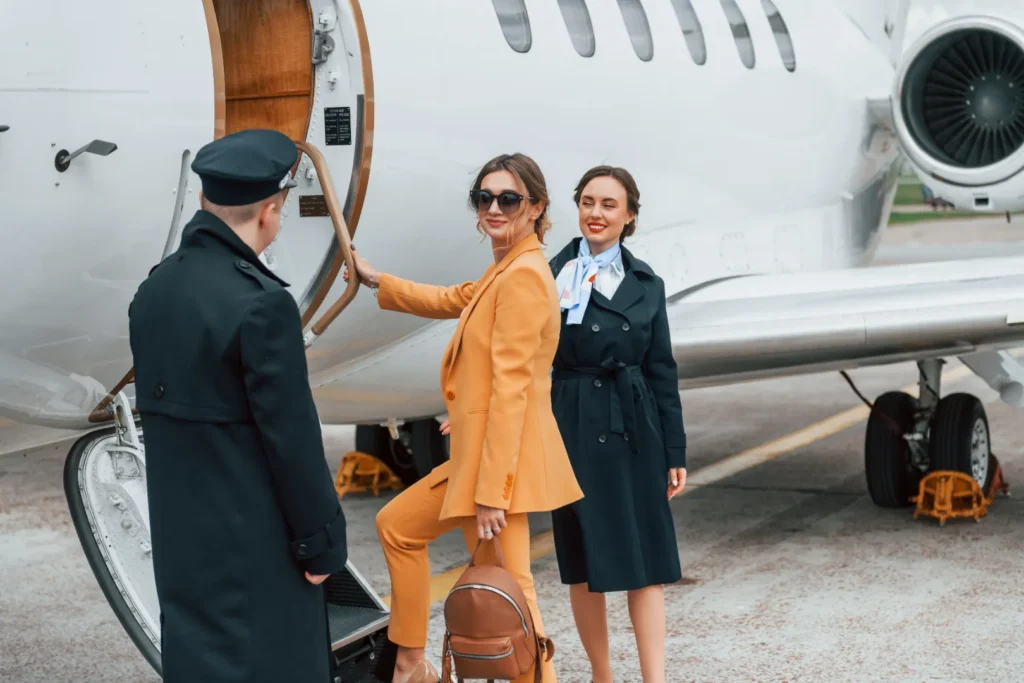
People choose private jets for several reasons.
Saving Time
Time is one of the biggest benefits of private aviation.
Travelers can often avoid long airport processes and may use airports closer to their starting point or destination.
For business travelers, saving several hours can be valuable.
Flexible Scheduling
Private jets offer more control over travel times.
Instead of choosing from an airline’s schedule, passengers can request a departure time that fits their plans, subject to operational limitations.
Access to Smaller Airports
Private aircraft can often use airports that do not have regular commercial passenger service.
This can reduce the amount of driving needed after landing.
Privacy
Privacy is another major reason people use private aviation.
Passengers can travel with their selected group instead of sharing the cabin with hundreds of other travelers.
Comfort
Private jets can offer comfortable seating and personalized cabin arrangements.
Larger aircraft may include beds, dining areas, private bathrooms, entertainment systems, Wi-Fi, and workspaces.
How Much Does a Private Jet Cost?
The cost of a private jet flight can vary widely.
There is no single price because many factors affect the final cost.
These include:
- Aircraft type
- Flight distance
- Number of passengers
- Departure and arrival airports
- Flight duration
- Fuel costs
- Crew expenses
- Airport fees
- Catering
- Ground transportation
- Aircraft availability
A short flight on a small private jet may cost several thousand dollars, while a long international trip on a large aircraft can cost tens of thousands of dollars or more.
The best way to know the actual cost is to request a detailed quote from a private aviation operator.
Buying a Private Jet
Some people purchase their own private jet instead of chartering one.
The purchase price depends on the aircraft’s size, age, model, range, equipment, and condition.
However, buying the aircraft is only part of the total cost.
Owners also have ongoing expenses such as:
- Fuel
- Maintenance
- Insurance
- Pilot salaries
- Crew expenses
- Hangar fees
- Airport fees
- Repairs
- Aircraft management
- Training
Because of these costs, private jet ownership can require a significant long-term investment.
Chartering a Private Jet
Chartering means renting a private aircraft for a specific trip.
For many travelers, chartering is a more practical option than owning an aircraft.
The charter company usually arranges the aircraft and crew based on the passenger’s requirements.
Travelers typically provide:
- Departure location
- Destination
- Travel date
- Departure time
- Number of passengers
- Baggage requirements
The operator then provides available aircraft and pricing.
Chartering can work well for families, business groups, sports teams, and individuals who do not fly frequently enough to justify ownership.
What Is Fractional Jet Ownership?
Fractional ownership allows several people or companies to share ownership of one private aircraft.
Each owner purchases a portion of the aircraft and receives access based on their ownership agreement.
This can cost less than purchasing an entire jet, but owners still have to pay ongoing operating and management expenses.
Fractional ownership can be useful for frequent travelers who want more consistent access to a private aircraft without owning the entire plane.
What Is a Jet Card?
A jet card is a private aviation membership program.
Members usually purchase a certain number of flight hours or commit funds for future travel. The program then provides access to private aircraft under specific terms.
Jet card programs can offer convenience and predictable arrangements, but the terms vary between providers.
Travelers should check details such as minimum flight times, cancellation rules, peak travel restrictions, and additional charges before joining.
How Many People Can a Private Jet Carry?
Passenger capacity depends on the aircraft.
Small private jets may carry only a few passengers, while larger jets can accommodate more people.
The maximum number of passengers is not always the same as the number that can travel comfortably. Some aircraft are configured with fewer seats to provide more cabin space.
The number of passengers, luggage, and travel distance can also affect which aircraft is suitable for a particular trip.
Can Private Jets Fly Anywhere?
Private jets provide access to many airports, but they cannot land anywhere a passenger chooses.
The aircraft must meet the airport’s requirements. Factors such as runway length, aircraft weight, airport operating hours, and available services can affect whether a private jet can use a particular airport.
International flights may also require customs, immigration, permits, and other arrangements.
Weather conditions can also affect departure and landing decisions.
Private aviation offers more flexibility than commercial travel, but flights must still follow aviation regulations.
Do Private Jets Have Pilots?
Yes. Private jets require qualified flight crews.
Depending on the aircraft and applicable regulations, a private flight may require one or more pilots. Larger jets generally require two pilots.
Pilots must meet licensing, training, and experience requirements.
Private aviation operators are also responsible for maintaining their aircraft and following applicable safety requirements.
What Amenities Do Private Jets Have?
Amenities depend on the aircraft.
Small jets may offer comfortable seats, basic entertainment, and a lavatory.
Larger private jets can provide much more space and luxury.
Possible amenities include:
- Reclining seats
- Wi-Fi
- Entertainment systems
- Dining tables
- Private bathrooms
- Sleeping areas
- Workspaces
- Larger luggage compartments
- Showers on some aircraft
Some privately owned aircraft have completely customized interiors.
Is Flying on a Private Jet Safe?
Private aviation operates under aviation regulations and safety requirements.
Aircraft must receive required inspections and maintenance, while pilots must meet appropriate licensing and training standards.
Safety can vary between operators, aircraft, and operating conditions. Travelers should research the operator before booking a charter flight.
Choosing a reputable operator with qualified crews and properly maintained aircraft is an important part of private aviation travel.
What Is the Environmental Impact of Private Jets?
Private jets generally use more fuel per passenger than large commercial aircraft because they carry fewer people.
As a result, private aviation can have a higher carbon footprint per passenger.
The environmental impact depends on factors such as aircraft type, distance, passenger count, and fuel consumption.
The aviation industry is working on ways to reduce emissions through more efficient aircraft, sustainable aviation fuel, improved flight operations, and new technologies.
Who Uses Private Jets?
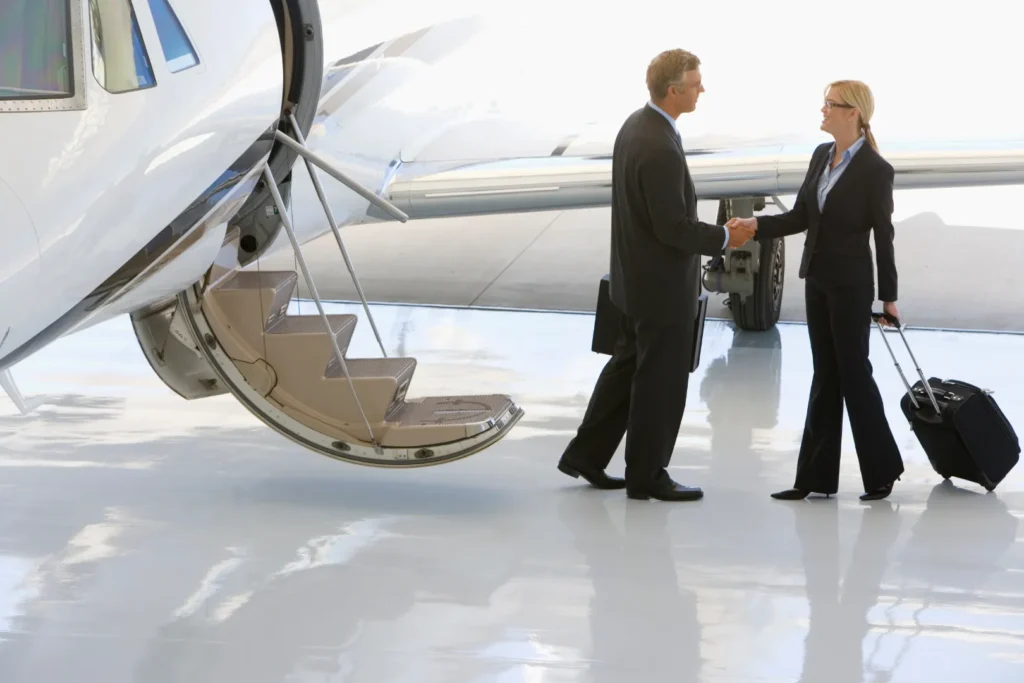
Private jets are used by many different types of travelers and organizations.
Business Travelers
Companies may use private aircraft to transport executives and teams to meetings, offices, factories, and other locations.
Families
Families may charter private jets for vacations, special events, and group travel.
Sports Teams
Sports organizations can use private aircraft to travel between games, competitions, and events.
Government Organizations
Government agencies may use private or government-operated aircraft for official travel.
Medical Teams
Specialized aircraft can also be used for medical transportation and other emergency purposes.
Private Jet vs Private Plane
The terms private jet and private plane are sometimes used in the same way, but they are not exactly identical.
A private plane can refer to different types of privately operated aircraft, including propeller planes, turboprops, and jets.
A private jet specifically uses jet engines.
Therefore, a private jet is a type of private aircraft, but not every private aircraft is a private jet.
What to Consider Before Booking a Private Jet
If you are planning to charter a private jet, consider the following factors.
Number of Passengers
Choose an aircraft that has enough space for everyone in your group.
Flight Distance
Make sure the aircraft has enough range for your journey.
Airport Options
Check which airports are available for your route and whether they are convenient for your trip.
Budget
Ask for a complete quote and check whether additional fees apply.
Operator
Research the charter company and its safety standards before booking.
Baggage
Tell the operator how much luggage you plan to bring because baggage requirements can affect aircraft selection.
The Future of Private Aviation
Private aviation continues to develop as aircraft manufacturers and operators introduce new technology.
More efficient aircraft, sustainable aviation fuel, improved navigation systems, and other technologies could help reduce operating costs and environmental impact.
Electric and hybrid aircraft are also being developed, particularly for shorter flights. These technologies are still evolving, but they may play a role in the future of private aviation.
Frequently Asked Questions
Can I bring pets on a private jet?
Yes, pets are usually allowed, but rules vary by aircraft operator and destination.
Can children fly on private jets?
Yes, children can fly on private jets. Specific safety requirements may apply depending on their age.
Can I bring more luggage on a private jet?
It depends on the aircraft’s available baggage space, passenger count, and weight limits.
Can I smoke on a private jet?
Smoking policies vary by operator and aircraft. Many private jets do not allow smoking.
Do private jets offer Wi-Fi?
Many private jets offer Wi-Fi, especially midsize and larger aircraft, but availability varies.
Can I choose my meals on a private jet?
Yes, charter operators often allow passengers to request meals and drinks before the flight.
Can I work during a private jet flight?
Yes, many private jets have tables, comfortable seating, Wi-Fi, and other features suitable for working.
Can a private jet make multiple stops?
Yes, private aircraft can usually make multiple stops when the itinerary and aircraft range allow it.
How far in advance should I book a private jet?
Booking several days or weeks ahead is generally helpful, especially during busy travel periods.
Can I book a private jet for a one-way trip?
Yes, one way private jet charters are available, although pricing depends on the aircraft and route.
Conclusion
A private jet is an aircraft used for private travel rather than regular commercial airline service. It gives travelers greater control over scheduling, airport selection, privacy, and the overall travel experience.
Private jets range from small aircraft for short trips to large, long-range jets designed for international travel.
Travelers can access private aviation by chartering a jet, joining a jet card program, using fractional ownership, or purchasing their own aircraft.
For occasional travelers, chartering may be the simplest option. Frequent travelers may consider membership or ownership programs.
Before choosing a private jet, it is important to consider the number of passengers, travel distance, aircraft type, airport options, cost, and operator reputation. Understanding these factors can help travelers decide whether private aviation is the right choice for their needs.